Jennifer Doudna's astounding work in CRISPR research has generated drastic traction in the field of synthetic biology and genetic engineering at a global scale. Since 2012, there have been thousands of researchers at universities, research companies, and other science-based lab spaces contributing to the global understanding of gene editing. As of 2025, there are over 70 businesses worldwide dedicated to CRISPR research located in tech-heavy areas such as San Francisco, California and Cambridge, Massachusetts.
Although it may seem that CRISPR technology can only be used and researched in these distinct companies, there are vast libraries of online CRISPR resources and gene editing platforms, such as Benchling, which aim to make gene editing accessible to anyone with an internet connection. Benchling Co-Founder Ashu Singhal's vision is "to make R&D what it's meant to be: a collaborative process to turn ideas into scientific progress and improve the lives of people everywhere."
CRISPR — Leading Tech of Gene Editing
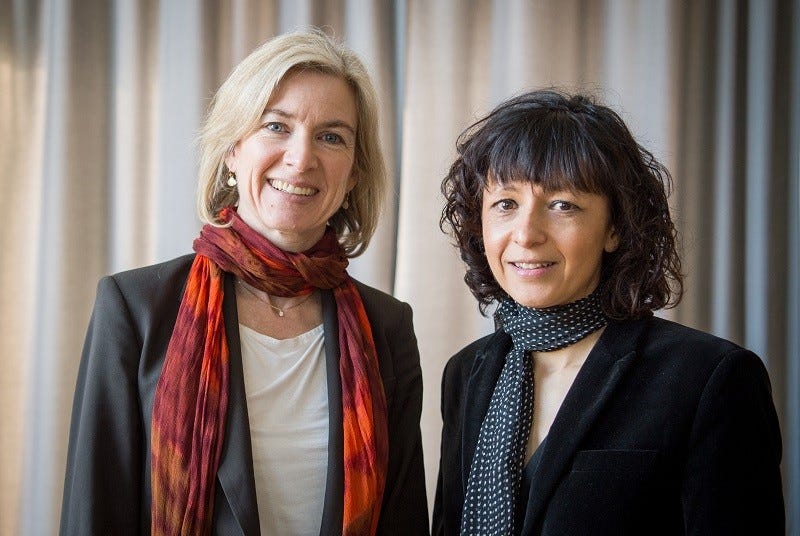
CRISPR-Cas9 (short for clustered regularly interspaced short palindromic repeats) is a system used for modern gene editing that originated from the DNA sequences of E. coli when they were first discovered in 1987. In bacteria, CRISPR is used as a defense mechanism against viruses, where the bacteria would send a Cas-9 enzyme to cleave their own DNA which could contain viral DNA. In 2012, Jennifer Doudna and Emmanuelle Charpentier, along with other colleagues, published a paper regarding the use of CRISPR-Cas9 as a gene editing tool to selectively edit segments of DNA in an organism.
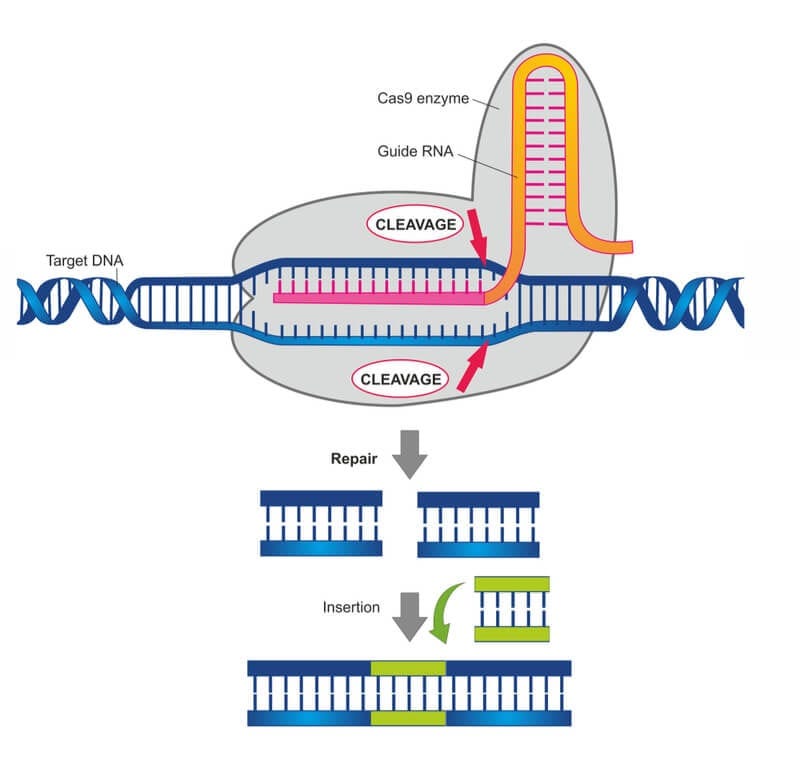
Although CRISPR in a gene editing application can look like a daunting system to understand, it can be broken down into 3 simple steps with 4 core components: the Cas9 enzyme, the guideRNA, the target DNA, and the desired sequence to be inserted.
- The guideRNA searches for a matching DNA sequence in the target DNA.
- Once a matching sequence is recognized, the guideRNA calls over the Cas9 enzyme to make a "cut" at the given sequence.
- A new sequence is added inside of the cut to create a new genetically modified strand of DNA.
There are a variety of other steps that play into the planning, execution, and applications of gene editing with CRISPR, but these are the fundamental steps that apply to almost every CRISPR-based edit. These trials can be conducted in a lab setting or simulated using an online application such as Benchling. CRISPR is incredibly customizable for the given task/desired edit, making it critical for the person conducting the edit to have prior planning on all the components required for the edit and the effects the edit will have on the organism.
Editing a Yeast Plasmid Using Benchling
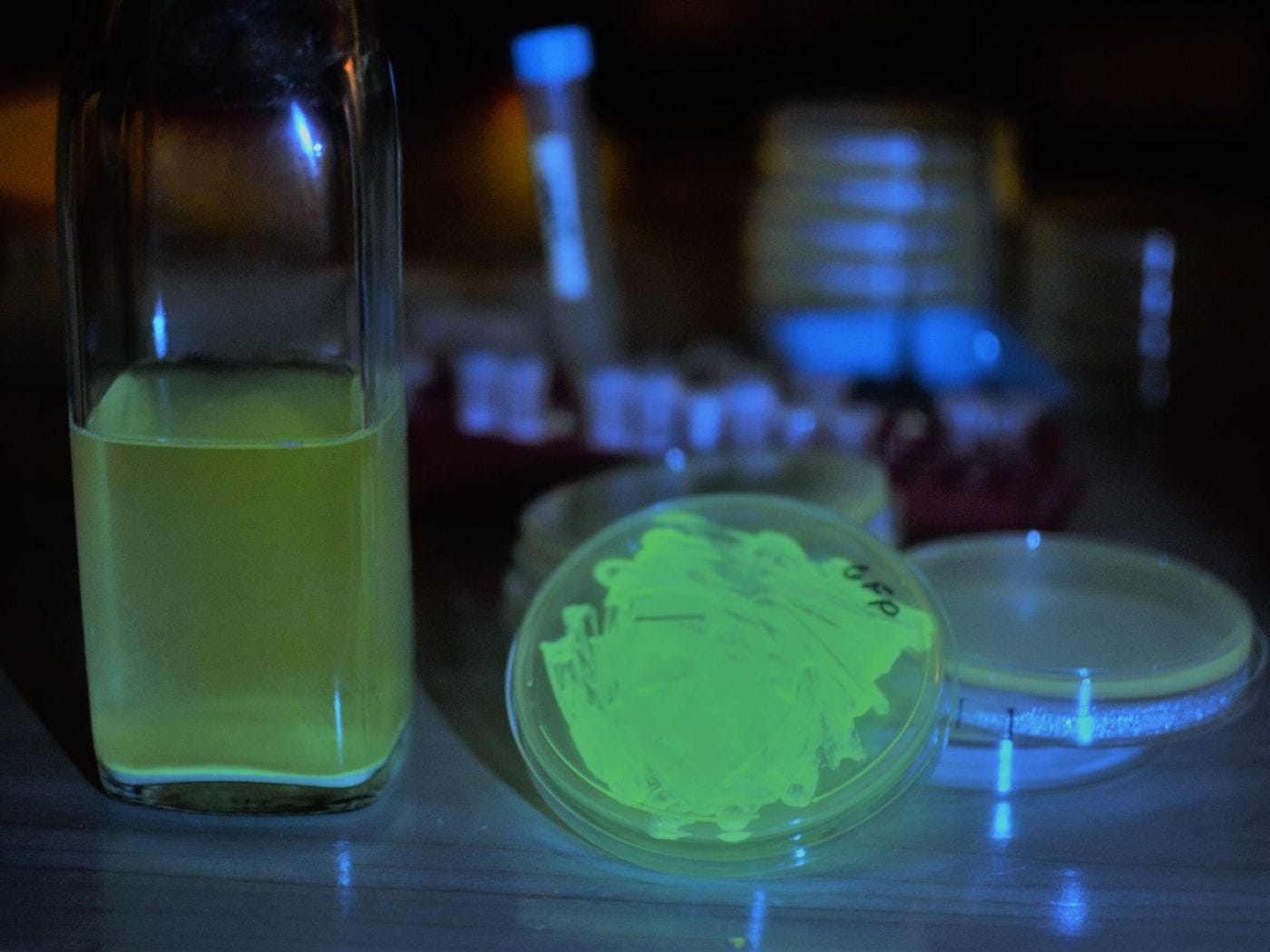
Benchling was founded in 2012 — since then, they have been developing their software platform to allow scientists across the world to edit biological sequences online. Benchling is a complex web application which may seem overwhelming to new users; however, the process is easier if one can understand the fundamentals of each step throughout the editing process. One can use external databases, such as Addgene, and upload model DNA sequences or desired genes into Benchling to conduct an edit. Benchling's goal is to increase the collaboration of scientists at a global scale to help push forward the field of gene editing and biotechnology. Using Benchling, I was able to insert a fluorescence gene into a yeast plasmid, which would cause the editing yeast colony to have a green glow under dim lighting. The following paragraphs will describe the steps to editing your own yeast plasmid using the Benchling web application. The last paragraph of this section will include a summarized explanation of what each added sequence will do in the edited plasmid.
To begin, you must create a Benchling account on their website. Then you must import an empty backbone plasmid from an external library. This is the plasmid that you will be inserting a fluorescence gene into. For this simulation, I used the pXP422 yeast plasmid from the Addgene database.
As mentioned earlier, the plasmid viewer may look overwhelming at first, but if you only focus on the parts necessary to the edit, you can greatly reduce the stress of trying to understand everything on your screen. When trying to edit the plasmid, we will typically be working with the right side of our screen, where we can view the plasmid in its circular form. A "straightened" view of the DNA plasmid can be seen on the left. These two views show the same plasmid, but the straightened view allows you to see the sequence in greater detail.
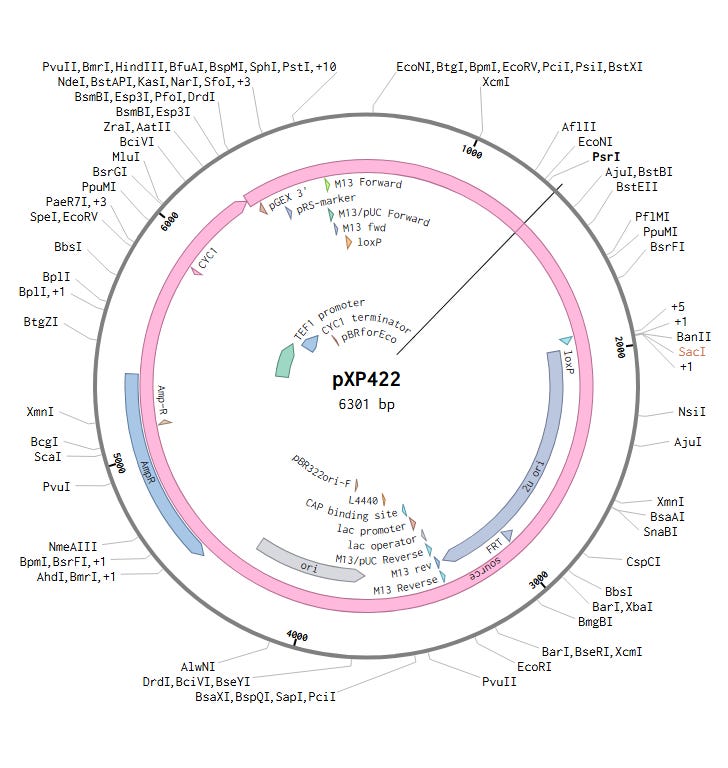
The plasmid contains all sorts of regions, such as operators and promoters which are critical to the cell's function. We want to avoid editing these sections as we do not want to interfere with these functions, instead, we want to cut in an "empty region" of the plasmid. For the pXP422 plasmid, a good region to work with is the 1000bp to 1770bp range. Next, we want to pick a restriction enzyme to use on the plasmid. Restriction enzymes will replicate the effect of a Cas9 enzyme by cutting the plasmid at the given sequence. You will want to use a restriction enzyme that only has one restriction site in the empty region so that you don't create unnecessary cuts. For this example, I will be using the AflII enzyme.
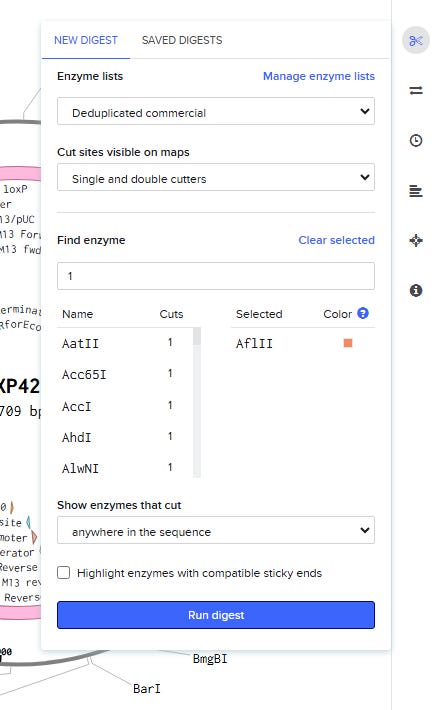
Once you have found your restriction site, you will want to add a TEF1 promoter sequence, which will tell the plasmid that there is a gene here that needs to be transcribed; in this case, the fluorescence gene. To add the promoter sequence, you can jump over to the TEF1 promoter and copy its sequence (found at roughly 5410bp). After copying this promoter sequence, you will want to paste it into the restriction site (eliminating the restriction site in the process), imitating the insertion process of a real CRISPR edit. Make sure you annotate your added sequences to keep track of what and where you are editing.
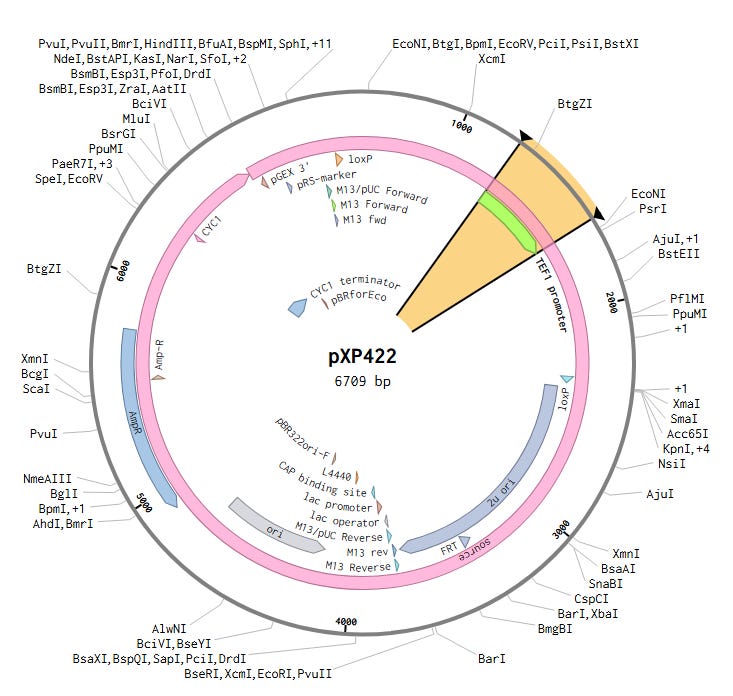
After the promoter sequence, there needs to be another sequence indicating where the DNA should start transcribing from. This is called a kozak sequence which you can copy here: GCCGCCACCAUGG. Although this is an RNA sequence (as it contains uracil), Benchling will automatically correct it to a DNA sequence and add the corresponding strand of DNA since RNA is single stranded whereas DNA is double. You can paste the kozak sequence directly after the TEF1 promoter.
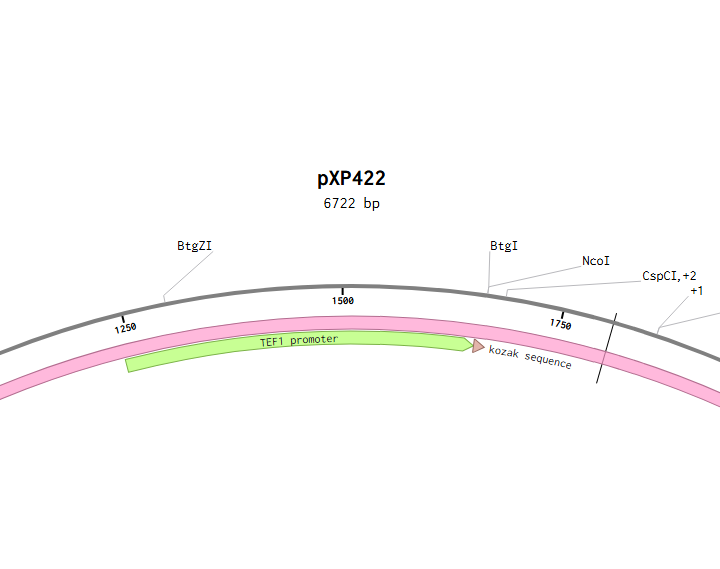
Next, you can add the green fluorescence protein gene (GFP for short) after the kozak sequence. During DNA transcription, the plasmid will begin to transcribe whatever gene comes after the kozak sequence, which will be our GFP gene. When the GFP gene is expressed, it will produce a protein which gives the yeast colony the green fluorescent glow. You can find a GFP sequence copy here.
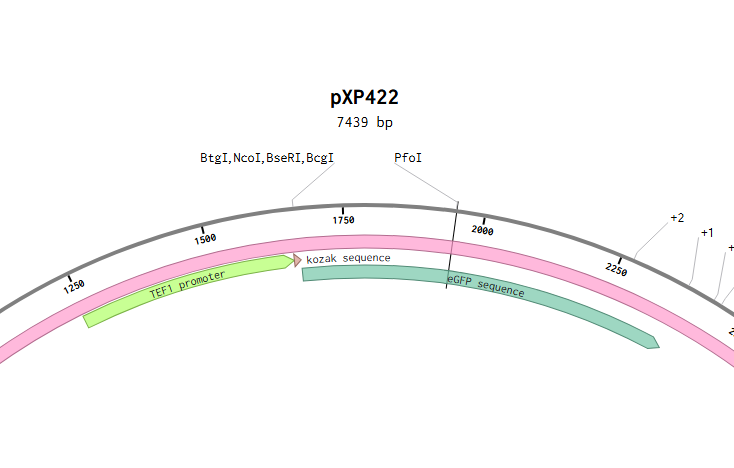
Lastly, you must add a stop codon sequence as well as a terminator sequence to tell the cell during transcription that this is where the DNA should stop replicating so that unnecessary DNA is not transcribed. Stop codons are relatively easy to find, here is an example sequence: TGA. You can type this sequence into the plasmid right after the GFP sequence, then paste in the CYC1 terminator sequence by copying it from another spot in the plasmid (found at 7000bp), and of course, annotating all edits to the plasmid.
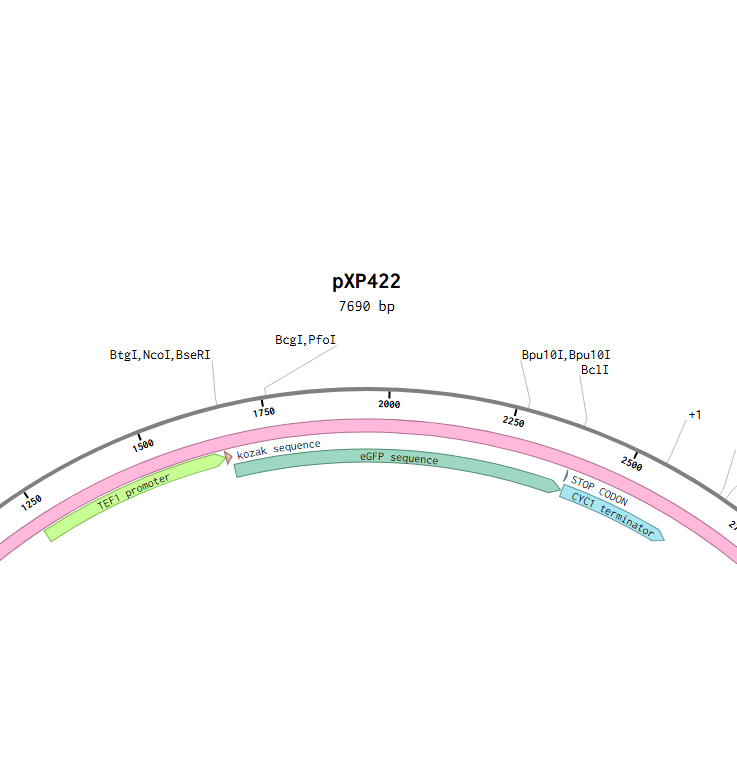
That is the end of the editing process! If you want to have this plasmid actually produced in a lab, you can export the file of your final product, add a description of all edits you made to the original backbone, then send that data over to any company who provides these lab services.
Gene Expression in the Plasmid
For the fluorescence protein to be visible, the gene that was added into the plasmid must be expressed. This is completed through processes called transcription and is directly correlated to the sequences added to the plasmid. Firstly, the cell needs to know where to start these processes from, which is identified by the promoter sequence. Transcription then starts at the kozak sequence, initiating the process of taking the "coding" of GFP to create the actual protein in a different process called translation. Lastly, transcription is signaled to end by the stop codon sequence and the terminator sequence. Once transcription and translation have both finalized, the green fluorescent glow of the protein should be visible.
Future Impacts of Benchling
The regulations around gene editing are incredibly nuanced and heavily discussed in bioethics conversations around the world. It is a controversial field, as we are essentially controlling evolution to benefit the needs of human society. With CRISPR platforms such as Benchling, gene editing will become accessible to all, making it a skill one can easily learn on their own, such as computer programming. The field of biology could be pushed to new boundaries from the comfort of one's own home, but what does this mean for the future?
Ecological Implications
CRISPR and gene editing is incredibly controversial due to its potentially irreversible and detrimental effects to a species and its ecosystem. There is no guaranteed procedure of understanding and predicting the ecological effects of a genetically modified organism, highlighting the difficulties one may face when determining if it is "safe" to introduce the organism to an ecosystem. For example, a scientist can develop a drought and pest-resistant crop which has no observable effects in a lab setting; however, when that crop is planted in a farm, it can potentially steal nutrients from other plants. The limited nutrients for other plants in the ecosystem could lead to the death of said plants, further limiting the availability of food for animals who rely on the nutrient-deprived plants as a primary source of nutrition. There are thousands of factors to consider when creating a modified organism, which is why we must be careful with the public's privilege of modifying organisms as we don't want homemade GMOs to overtake natural ecosystems.

Socioeconomic Implications
In countries such as Canada, conducting inheritable genetic modifications to human germline cells is illegal, and can land you 10 years in jail. Such laws aim to prevent a gene editing disaster, which would be the result of a physical creation of disparities between economic classes due to the restricted access of gene therapeutics. With all great biological treatments comes with great prices and costs for the patients. If these treatments are only available to those who can afford the treatments, we will begin to see a literal biological disparity between classes, sending us down a dystopian rabbit hole. Those of higher economic status will have more resistance to disease, better overall health, and more cosmetic advantages than those who cannot afford such gene therapies.
With this potential disaster of a society in mind, it may lead one to believe that we should not conduct hereditary genetic modifications, as it will continue this downward spiral towards genetic segregation, but Jennifer Doudna proposes a different outlook in her book A Crack in Creation: "Someday, we may consider it unethical not to use germline editing to alleviate human suffering."
Perhaps we can find a cure to a disease such as sickle cell anemia with gene editing tools, and in that case, will it be unethical to prevent the use of such treatments? Where do we draw the line between eliminating a disease versus creating more disparity between social classes? I am by no means a bioethics professional, which is why I leave that question to the experts for a more thorough analysis; however, I believe that we are heading in the right direction. We are proceeding with higher caution until we begin to understand more of what CRISPR entails, as we realize that with the more we learn, the more we realize how much we don't truly know.
The Brightside
CRISPR isn't all about creating disparity between classes or causing ecological catastrophes, there are also numerous promising research studies being conducted which use gene editing and CRISPR technology. The basis of CRISPR relies on the recognition of genes using guideRNA, allowing for CRISPR to be used in a variety of targeted therapies. GuideRNA could potentially be used to track down mutated or infected DNA, essentially creating a defense mechanism which combines the immune system properties of both humans and bacteria. Furthermore, we can edit different organisms to produce high-demand substances like insulin. On paper, the idea is conceptually easy. We take a bacteria, cut open a slot in its plasmid, insert a gene which creates insulin, and have that bacteria permanently create insulin for patients. Benchling aids both professional and "DIY" researchers across the globe in pushing the boundaries of CRISPR to new extents, demonstrating exponential growth in the last few years, and illustrating a promising future for CRISPR and gene editing technology.