Overview
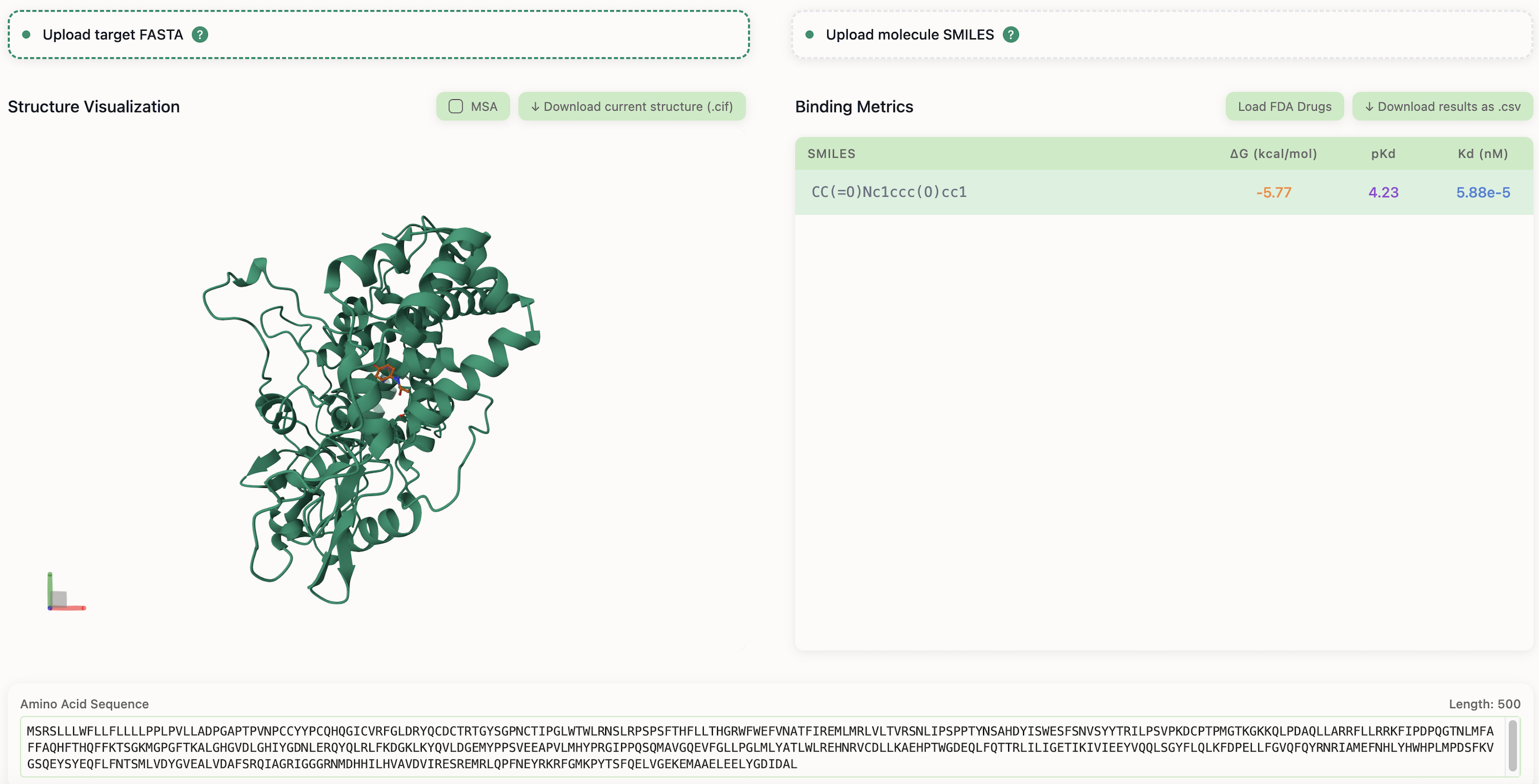
This project explored the use of computational tools to predict the binding affinity of various NSAIDs to the COX enzyme, with the goal of comparing drug–enzyme interactions and identifying relative binding strengths.
Background
Protein-ligand binding affinity prediction is a key component of computational drug discovery. Tools like PLAPT allow researchers to estimate interaction strength before experimental testing, reducing cost and time in early-stage research.
Approach
I used the CLI version of Bindwell's PLAPT program to analyze the binding affinity of different NSAIDs with the COX enzyme. This required setting up the computational environment, managing dependencies, and running simulations via the command line.
- PLAPT (Bindwell)
- NIH
- Git
Results
The project produced comparative binding affinity predictions across multiple NSAIDs. Beyond the biological insights, I gained hands-on experience with command-line workflows, Git version control, virtual environments, and Conda-based dependency management.
Limitations & Future Work
The analysis relied on pre-existing models and did not involve custom model training. Future work could include deeper evaluation of prediction accuracy, comparison with experimental data, or integrating machine learning-based scoring methods.
Key Takeaways
- Learned how computational tools are used in early-stage drug discovery
- Built confidence using CLI-based scientific software
- Developed practical skills in Git, Conda, and environment management